Cats | Enrichment
Best Cat Scratchers to Save Your Furniture in Australia
Scratching is a hardwired need — the way a cat keeps its claws in shape, stretches the muscles down its back, and stakes a claim on the lounge room. The trouble is that a cat with no proper outlet defaults to the nearest sofa arm. The fix is a scratcher your cat prefers to the furniture — tall enough for a full stretch, stable enough to lean into, and parked where the damage is already happening. We've compared four cat scratchers you can buy in Australia right now, from a weighted sisal post to a flat sisal lounger, and worked out which style suits which cat.
Best Overall

Feandrea 85cm Cat Scratching Post
- 85cm — a proper full stretch
- Weighted, wide anti-tip base
- Heavier to move once placed
Best for Multiple Cats
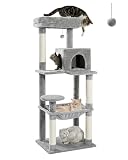
PAWZ Road 143cm Cat Tree
- Multi-level, fits two cats
- Sisal posts, condo, hammock
- Takes up real floor space
Best Budget Pick

ANWA 81cm Cat Scratching Post
- Full 81cm height for the price
- Natural sisal, three toys
- Lighter base, place by a wall
Best for Small Spaces

Avont Sisal Cat Scratcher Lounger
- Tucks into a small flat
- Sisal top, solid pine frame
- Horizontal use only

We judged these four on the things that decide whether a cat uses a scratcher or walks past it — height and stability for a real stretch, how well the scratching surface holds up, the footprint in a typical Aussie home, and the scratching style each one suits. If your cat's more interested in play than furniture, our guide to getting a bored cat moving again pairs neatly with this one.
What to look for in a cat scratcher
The five things that decide whether a scratcher gets used or ignored. Scroll across to read all five.
Tall enough to stretch
Height and stability together decide whether a post gets used. Research points to an ideal post — sisal-wrapped, vertical, around 0.9 m tall on a wide base; in practice a firmly anchored 80–90 cm post suits most cats better than a taller one that wobbles.
Vertical or horizontal
Some cats rake downward on a standing post; others pull across a flat surface on the floor. Watch which your cat already does to the furniture and match the shape, since many homes end up wanting one of each.
A base that won't tip
A post that rocks under a hard pull teaches a cat to give up and go back to the couch. Look for a wide, weighted base or a wall fixing, especially for a big or enthusiastic scratcher.
A surface that lasts
Natural sisal rope and tightly woven sisal fabric take months of clawing; loose cardboard and thin carpet shred fast. A denser, tightly wound surface is cheaper over time even when it costs a little more upfront.
The right spot
Placement decides whether a scratcher works at all. A post set in front of the furniture your cat's already scratching wins far more often than one hidden away, and a multi-cat home needs more than one.
At a glance
Our top four scratchers compared — style, price, and our one-line take on each.
| Rank | Product | Best for | Key feature | Price guide | Check price |
|---|---|---|---|---|---|
| Best Overall |  | Cats that want a full-height stretch | 85cm sisal post, 13cm barrel, weighted 50×40cm base | $$ | Check price |
| Best for Multiple Cats |  | Multi-cat homes needing shared territory | 143cm tower, several sisal posts, condo, hammock | $$$ | Check price |
| Best Budget Pick |  | A first post without overspending | 81cm sisal post, three toys, compact 40cm base | $$ | Check price |
| Best for Small Spaces |  | Small flats and floor-scratching cats | 58×33cm sisal lounger, solid pine frame, 2-in-1 nap | $$ | Check price |
Our picks in detail
What we rate, what to watch for, and the cat each scratcher really suits.
Best Overall: Feandrea 85cm Cat Scratching Post
Bottom line — the post most cats will actually use: tall, thickly wrapped in sisal, and heavy enough to lean into without tipping.
The Feandrea gets the fundamentals right, which is most of the battle with a scratching post. At 85 centimetres it sits just shy of the 0.9-metre research ideal, but it's still tall enough for a grown cat to reach up and stretch out its full spine — not the cramped half-scratch a short post forces — and it makes up the difference on stability, with a barrel a generous 13 centimetres across, wrapped in tough sisal that stands up to hard raking instead of fraying within a fortnight.
That height only pays off because the base does its job. A wide 50-by-40-centimetre platform, reinforced with extra battens underneath, gives the post enough ballast that a cat can throw its weight into a downward pull without the whole thing rocking — and it's that wobble that teaches cats to give up and wander back to the couch. A spring pompom with a bell sits up top for the cats that like a target, though that's a nice-to-have on the side. The trade-offs are modest: it's a plain single post with no perch or hideaway, and the mass that keeps it steady makes moving it between rooms a two-handed job. For most cats and most homes, it's the one to beat.
| What we love | Areas for improvement |
|---|---|
|
|
Best for Multiple Cats: PAWZ Road 143cm Cat Tree
Bottom line — the pick for more than one cat: several scratching posts and enough vertical territory to keep the peace.
A single post works for a single cat, but multi-cat households hit a quieter problem — cats guard their scratching spots, and one post becomes contested ground. The PAWZ Road answers that by stacking several sisal-wrapped posts into a 143-centimetre tower, so there's more than one legitimate place to scratch, climb and perch without anyone having to negotiate for it.
Beyond the posts, it's a piece of cat furniture doing three jobs at once. A roomy condo and a slung hammock give timid or bonded cats their own height to retreat to, and vertical space is one of the cheapest ways to make a small flat feel bigger to a cat. The heavy base is dense, low-formaldehyde board with an anti-topple strap for the wall, which earns its keep once a determined cat is launching at the top perch. The compromises come with the size: it claims a real patch of floor, the plush covering frays sooner than bare sisal when a cat claws it hard, and flat-pack assembly is a fiddly half-hour with the instructions to hand. A single cat won't need all that, but in a multi-cat home it's the thing that keeps the peace.
| What we love | Areas for improvement |
|---|---|
|
|
Best Budget Pick: ANWA 81cm Cat Scratching Post
Bottom line — the budget pick that doesn't skimp on height: a genuine full-length sisal post at the low end of the range.
Plenty of cheap scratchers cut the one corner that matters — height — leaving a stubby post a grown cat can't properly stretch against. The ANWA doesn't. At 81 centimetres it gives a full-sized cat close to the reach of posts costing far more, wrapped in natural sisal that stands up to real clawing, where budget models often use loose rope that unravels.
You're giving up the heavy base and the extras here; the scratching surface is the same honest sisal. The base is a compact 40-centimetre square that keeps the footprint apartment-friendly but carries less ballast than the wide platforms on the pricier posts, so it's happiest steadied against a wall where a big cat can't rock it over. Three dangling toys — a couple of pompoms and a spring ball — come attached for the cats that treat a post as a climbing frame, and the whole thing screws together in a few minutes with the included key. As a first scratcher, a second station in another room, or a step up for a kitten graduating to a proper post, it's a lot of height for very little outlay.
| What we love | Areas for improvement |
|---|---|
|
|
Best for Small Spaces: Avont Sisal Cat Scratcher Lounger
Bottom line — the small-space pick: a flat sisal lounger for the floor-scratchers and the flats with no room for a tower.
Not every cat scratches standing up, and not every home has a corner to spare for a full-height post. The Avont is built for both cases — a low sisal-topped lounger a cat rakes across horizontally, on a footprint small enough to slide beside a couch or under a console. For a cat that already claws the rug, it matches the surface they're telling you they want.
The sisal here is the durable, tightly woven kind on a solid pine frame that resists the wobble and gnawing that finishes off flimsier loungers — closer to a small piece of furniture than a throwaway pad. The curved top doubles as a place to sprawl once the scratching's done, which is part of why cats take to it. The limits are baked into the format: it's horizontal only, so a cat that likes a vertical stretch still needs a post; the surface is sized for one cat rather than a crowd; and the sisal pad will eventually wear through and want replacing. In a studio or a small flat, though, that compact shape is exactly the appeal.
| What we love | Areas for improvement |
|---|---|
|
|
FAQ
Why does my cat scratch the furniture?
How tall should a cat scratching post be?
Vertical post or horizontal scratcher — which does my cat need?
How do I get my cat to actually use a new scratcher?
Can I stop my cat scratching altogether?
Final thoughts
Pixel is a committed vertical scratcher — give her a post and she'll rake downward with her whole body behind it — which is exactly why the shape you pick matters more than the number on the price tag. Cats don't all scratch the same way. Some stand and pull downward, some stretch flat across the floor, and the quickest way to save your furniture is to watch which one your cat already does and buy that shape first. Placement counts just as much: a scratcher hidden in a spare room gets ignored, while the same one parked right beside the spot your cat's already targeting tends to win within a week.
If I were starting from scratch today, I'd match the scratcher to the cat before worrying about price. A confident stretcher wants height and a base that won't tip; a kitten or an older cat often does better with something low and horizontal; a multi-cat home needs more than one, because cats guard their territory and won't happily share a single post. Get the style right and even an inexpensive scratcher earns its keep. Get it wrong and the priciest tower in the house becomes an elaborate place to drape a blanket while your sofa keeps taking the hits. If a full climbing tower is what your cat's really after, our best cat trees for large cats covers the sturdy options.
We Think You’ll Also Like These Guides
 CAT
CATBest Cat Harnesses for Walking in Australia: Escape-Proof Picks
A loose lead turns one startled bolt into a lost cat. We compare four escape-proof cat harnesses for safe, secure walks — a vest, a step-in and more.

 CAT
CATBest Cat Trees for Large and Heavy Cats in Australia
A big cat needs height it can actually use — a perch it fits, posts that don't flex, and a base that won't tip. Here are four cat trees built for…
 CAT
CATBest Cat Wand Toys in Australia: Ultimate Aussie Picks for 2026
Nothing unlocks the inner hunter like a good wand. We found the most durable, engaging wand toys to get your cat leaping again.