Dogs | Travel
Best Dog Car Harnesses in Australia: Four Picks for Safe Travel
An unrestrained dog in a moving car is a risk to everyone in it — a distraction on a good day, and in a sudden stop, a loose projectile. Australian road rules expect a driver to keep proper control, and a loose dog works against that — a car harness is the simplest way to manage it: it threads onto the seat belt, keeps your dog on the back seat, and spreads the force of a stop across the chest, keeping it clear of the throat. The catch is that an everyday walking harness or a collar clip isn't built for a crash — a car harness is a different piece of gear, and the good ones are crash-tested. We've compared four on sale in Australia today, from a crash-tested premium pick to a budget vest, and worked out which dog each one is really for.
Best Overall
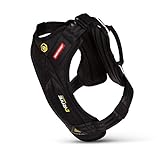
EzyDog Drive Harness
- Seat-belt webbing build
- Crash-tested restraint
- Dearest option here
Best for Everyday Use

Kurgo Tru-Fit Enhanced Strength
- Crash-tested, wallet-friendly
- Walks and rides in one
- Not for giant breeds
Best for Big Dogs

Company of Animals CarSafe
- Connects direct to belt
- Built wide for big dogs
- Overkill for small dogs
Best Budget Pick

SlowTon Car Harness Set
- Padded chest vest
- Breathable, cheap to buy
- Not crash-tested

A car harness proves its worth on the day you hope never comes — the emergency stop, the rear-ender at the lights. Below we compare four sold in Australia: a crash-tested all-rounder, a versatile daily harness, a big-dog option and a budget vest. First, the handful of things that separate a real restraint from a strap that only looks the part.
What to look for in a dog car harness
The five things that decide whether a harness will protect your dog in a crash. Scroll across to read all five.
Crash testing
There's no mandatory Australian crash standard for dog restraints, so look for a harness a maker has crash-tested, ideally through a group like the US Center for Pet Safety. A 'car harness' label on its own doesn't mean it has been through a crash test.
How it holds on
The safest harnesses either clip straight into the seat-belt buckle or thread onto the belt through built-in loops. Fewer connection points mean fewer parts to fail, so favour a design that ties to the belt itself over one clipped to a collar.
Load on the chest
A car harness should spread the force of a stop across a broad chest panel, safely off the throat. Wider, padded straps carry a heavy dog's momentum far better than a thin band that concentrates the load in one line.
Getting the size right
Fit is what makes a restraint work, so measure the chest girth and neck rather than going by weight. A harness that shifts or lets a dog slip loose in a jolt gives away most of the protection it was bought for.
Everyday comfort
A restraint gets used only if it's comfortable to wear and quick to clip on. Breathable panels earn their keep in the Australian heat, and a harness that doubles for walks saves swapping gear between the car and the footpath.
At a glance
Our top four picks compared — specs, prices, and our one-line take on each.
| Rank | Product | Best for | Key feature | Price guide | Check price link |
|---|---|---|---|---|---|
| Best Overall |  | Overall safety and fit | Crash-tested seat-belt webbing build | $$$ | Check price |
| Best for Everyday Use |  | Daily driving and walks | Crash-tested, includes seat-belt tether | $$ | Check price |
| Best for Big Dogs |  | Big, strong dogs | Crash-tested, clips direct to belt | $$$ | Check price |
| Best Budget Pick |  | Buyers on a budget | Padded vest with seat-belt strap | $ | Check price |
Our picks in detail
What we love, what to watch for, and the dog each pick really suits.
Best Overall: EzyDog Drive Harness
Bottom line — the safest all-rounder here: crash-tested, built from real seat-belt webbing, and quick to clip in once the one-time setup is done.
This is the one to beat. EzyDog is an Australian-founded brand, and the Drive Harness is made from the same webbing used in car seat belts, with a padded chest plate that spreads crash force across the sternum. It's crash-tested to Australia's vehicle-restraint standard (ADR 42/04), as well as matching European and US standards. Once you've threaded the seat belt through the two top loops in a one-time setup, clipping the dog in each trip takes seconds.
The Drive sits in the premium bracket, and it shows: a stainless-steel seat-belt loop, a chest panel that won't dig in on a long drive, and stitching made to outlast the car. It doubles as a walking harness for the trip from car to kerb, with a back ring for a lead — though it's a restraint first. Sizing starts at small and runs up, so measure the chest girth against EzyDog's chart before you buy; the fit has to be snug for the crash protection to count. For a dog that travels often, it's the safe default.
| What we love | Areas for improvement |
|---|---|
|
|
Best for Everyday Use: Kurgo Tru-Fit Enhanced Strength
Bottom line — the value pick that pulls double duty: a crash-tested car harness and a proper walking harness in one, tether included.
Kurgo's Tru-Fit is the one most people should look at first on price. It's crash-tested for dogs up to a rated weight, uses a steel nesting buckle for a secure fit, and comes with a seat-belt tether in the box so you're not buying two things. It slips on over the head in one quick, low-fuss motion and adjusts at five points.
What makes it the everyday choice is that it works as a normal walking harness too, so the same piece of gear covers the drive to the park and the walk once you're there. The tether clips to the harness's back ring and into the seat-belt buckle, keeping the dog on the seat with a bit of room to lie down. It's less heavily built than the big-dog options here, which keeps it comfortable but means a very large, powerful dog is better served elsewhere. For a small-to-medium dog that rides and walks in the same harness, it's hard to beat for the money.
| What we love | Areas for improvement |
|---|---|
|
|
Best for Big Dogs: Company of Animals CarSafe
Bottom line — the choice for a big, strong dog: a crash-tested harness that clips straight to the seat belt and holds up under real weight.
Company of Animals built the CarSafe purely as a car restraint, and it connects directly to the seat belt with no separate tether to clip. It's crash-tested, cut wide across the chest to carry the load of a heavier dog, and finished with a hi-vis front panel that helps a dark-coated dog show up in a car park at night. Sizing runs up to large.
The direct-to-belt design is the draw for a big dog: fewer links in the chain, fewer things to fail when it matters, and a wide chest piece that spreads a heavy dog's momentum over a broad area, so no single strap takes the hit. It carries front and back lead rings, so it works as a walking harness once you're out of the car — handy if you'd rather not buy a big dog a separate harness for walks. It's dearer and bulkier than the everyday picks and overkill for a small dog, but for a determined big dog that needs a restraint you can trust, that heavier build is exactly the point.
| What we love | Areas for improvement |
|---|---|
|
|
Best Budget Pick: SlowTon Car Harness Set
Bottom line — the budget way to stop a dog roaming the car: a padded vest and seat-belt strap set, though it isn't crash-tested.
If money's the deciding factor, the SlowTon set covers the basics for a fraction of the price. You get a breathable mesh vest and an adjustable strap that clips into the seat belt, so the dog stays on the seat instead of wandering into the footwell or up front. The vest spreads the strap's pressure over the chest instead of loading one point at the collar.
Be clear on what it is and isn't. It's a restraint for keeping a settled dog in place and cutting driver distraction, not a crash-tested safety harness — so it suits short local trips more than a highway run with a big, anxious dog. The mesh is light and breathes well in summer heat, and the quick-release buckles make it easy on and off. Spend more if you want tested crash protection; for a small dog and the daily school run, though, it's a sensible step up from clipping a lead to the collar, which can jerk the neck in a stop.
| What we love | Areas for improvement |
|---|---|
|
|
FAQ
Do I legally have to restrain my dog in the car?
Can I just clip the lead to my dog's collar instead?
Should my dog ride in the front or back seat?
What size car harness does my dog need?
How can I tell a car harness is safe?
Final thoughts
I'll say plainly where I landed on this. With car gear, I'd rather pay once for a harness that's been crash-tested than pinch pennies on a strap that hasn't. My staffy Pepper rides in the back most weekends, and the quiet confidence of a harness that clips properly to the belt is worth more to me than any feature list. A restraint only works if you use it every single trip, so buy the one you'll bother to clip on — comfortable, quick to fit, and sized for your dog.
Fit matters more than the brand here. Measure your dog's chest and neck, follow the maker's sizing chart, and check the harness sits snug and doesn't creep up under the throat. Keep the dog on the back seat, well away from the front airbag, and never clip a restraint to a flat collar — the load belongs on the chest. If you're heading further afield, our guide to dog car travel safety covers the rest, from airbags and heat to the boot-versus-back-seat question. Get those basics right and almost any properly made car harness will do the one job that really counts.
We Think You’ll Also Like These Guides
 DOG
DOGBest Dog Car Seat Covers: Ultimate Australian Reviews
Mud, fur and claws are no match for the right cover. We found the best car seat protectors that actually stay put and clean up easy.

 DOG
DOGBest Dog Travel Water Bottles in Australia: Ultimate Guide
Walks, road trips and hot days — easy hydration on the go. We compared the best leak-free travel bottles for thirsty dogs.
 DOG
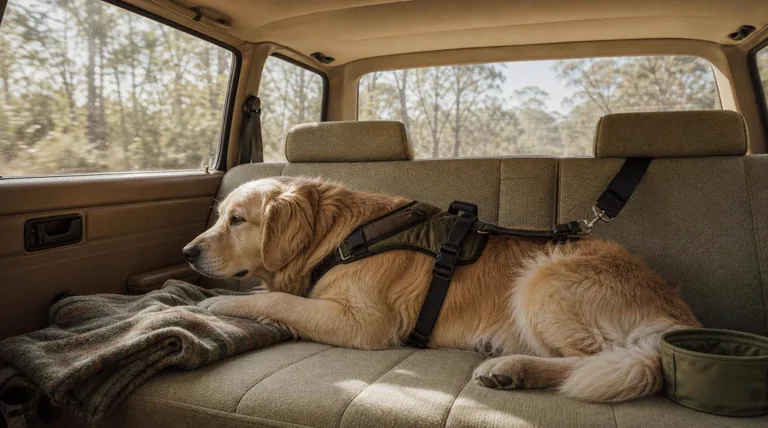
DOGTravelling with your dog by car in Australia: the safety guide
A loose dog in the car is a real danger. Here's how to travel safely — restraints, crates and the law — on every Aussie road trip.