Dogs | Crates
Best Dog Crates in Australia: Four Picks for Home and Training
A crate isn't a cage if you get it right — it's the one spot in a busy house where a dog can switch off, and the tool that makes toilet training and settling a new puppy far less of a battle. The trouble is that "dog crate" covers everything from a flimsy fold-flat box to a steel kennel a determined dog can't dent, and the wrong one either rattles itself apart or the dog breaks out of it in an afternoon. The crate that works is the one matched to your dog's size, strength and where it'll live in the house. A travel crate is a different animal again — made for the car or a flight, and a poor fit for the lounge-room corner. We've compared four home crates on sale in Australia, from an everyday wire crate to a heavy steel build for dogs that try to break out.
Best Overall

MidWest iCrate 30-Inch Double Door Folding Metal Dog Crate
- Two doors fit any layout
- Divider grows with a puppy
- Thin wire won't stop a chewer
Best for Big Dogs

BingoPaw 42-Inch Heavy Duty Dog Crate
- Square steel tube frame
- Front, top and food doors
- Heavy at 24 kg once built
Best for Living Spaces

Hzuaneri Wooden Dog Crate Furniture with Barn Door
- Doubles as a side table
- Blends into a living room
- Wood won't survive a chewer
Best for Small Dogs

VaKa 24-Inch 3-Door Foldable Dog Crate with Divider
- Three doors for easy access
- Cheapest crate on this list
- Small sizes only

Below we compare four crates sold in Australia: an everyday wire crate for most dogs, a heavy-duty steel crate for strong dogs, a furniture-style crate for open-plan homes, and a small crate for puppies and little dogs. First, the handful of things that separate a crate worth buying from a box that only looks the part.
What to look for in a dog crate
Five things that decide whether a crate suits your dog and your home. Scroll across to read all five.
Size it properly
A crate should let your dog stand up, turn around and lie down flat, with only a little room to spare. Measure nose to the base of the tail and floor to the top of the head, add a few centimetres, and use a divider to shrink a big crate down while a puppy grows into it.
Match it to the dog
A calm medium dog is fine in coated wire, but a strong, anxious or escape-prone dog needs welded steel and secure latches. The right build is the one your particular dog can't bend, chew or rattle its way out of.
Doors and access
Two or three doors give you options for where the crate sits and how you reach in, which matters against a wall or in a tight hallway. A single-door crate costs less but pins you to one layout.
Cleaning and floors
A slide-out leak-proof tray turns an accident into a two-minute job, and plastic feet save your floorboards from scratches. Timber-based crates look smarter but usually mean wiping the base out by hand instead.
A den, not a cage
A crate works because dogs like a small enclosed space to retreat to, so it should feel like a den it retreats to, and it should never be used for long confinement or punishment. Add soft bedding, keep sessions positive, and build crate time up gradually.
At a glance
Our top four picks compared — specs, prices, and our one-line take on each.
| Rank | Product | Best for | Key feature | Price guide | Check price link |
|---|---|---|---|---|---|
| Best Overall |  | Most dogs, everyday home use | Double doors, divider and leak-proof tray | $$$ | Check price |
| Best for Big Dogs |  | Big, strong or escape-prone dogs | Square steel tube with dual latch locks | $$$$ | Check price |
| Best for Living Spaces |  | Crates that live in the lounge | Wooden end-table design with a barn door | $$$$ | Check price |
| Best for Small Dogs |  | Puppies and small breeds | Three doors, divider and leak-proof tray | $$ | Check price |
Our picks in detail
What we love, what to watch for, and the dog each pick really suits.
Best Overall: MidWest iCrate 30-Inch Double Door Folding Metal Dog Crate
Bottom line — the sensible default for most homes: two doors, a puppy divider and a leak-proof tray at a fair price.
This is the crate most people should start with. It's the benchmark folding wire crate — a double-door design so it fits whichever way your room is laid out, a divider panel that shrinks the space for a puppy and opens up as it grows, and a leak-proof plastic pan that slides out for the inevitable mess. The 30-inch size suits a medium dog like a beagle or a cocker.
Folded flat it's easy to move between rooms or tuck away when the visitors leave, and the whole thing sets up without tools in about a minute. It's bare wire, so a mat or a bit of bedding turns it into a spot a dog wants to be, and it's worth clipping both doors properly or a clever dog learns to rattle them open. The honest limit is strength — the gauge is fine for a calm or medium dog, but a big powerful escape artist will bend it, and that dog wants the steel option below. For most households, this covers the job.
| What we love | Areas for improvement |
|---|---|
|
|
Best for Big Dogs: BingoPaw 42-Inch Heavy Duty Dog Crate
Bottom line — square steel tube, double latches and room for a big dog, for a strong dog that has escaped from a wire crate.
This is the crate for a big dog that bends wire or chews through plastic. The frame is 0.6-inch square steel tube, which is made to stand up to chewing better than round wire. The XL size is 107 cm long, so a large breed has room to stretch out. The doors close with dual latch locks, designed to stop a dog opening them from inside.
There are three ways in. The front door is for the dog, the top door lets you reach in, and a small hatch takes the food bowl. The tray comes out for cleaning, and the crate goes together in about half an hour. It has two drawbacks. It weighs 24 kg, so it's hard to move once it's built. It's also bigger and stronger than a calm small dog needs. For a strong dog that's already escaped from a wire crate, this is the one we'd buy.
| What we love | Areas for improvement |
|---|---|
|
|
Best for Living Spaces: Hzuaneri Wooden Dog Crate Furniture with Barn Door
Bottom line — the crate for people who hate the look of a cage: a wooden end table that hides a calm dog's den.
The usual objection to a crate is that it looks like a cage parked in the living room. This one answers that — it's a wooden cabinet with a sliding barn door that reads as an end table, with a flat top you can stand a lamp or a plant on. Its cabinet measures about 32 inches on the outside, but thick timber walls mean the enclosed den inside runs smaller than a wire crate of the same number — it's sized for a small-to-medium dog, so the crate stops dominating the room it lives in.
It suits a specific dog: calm, house-trained, and past the chewing stage. Timber panels and a mesh door look the part and give decent airflow, but they won't survive a determined chewer the way steel or coated wire will, and there's no slide-out tray, so cleaning means wiping the base out by hand, with no pan to hose off. Think of it as furniture that happens to crate a settled dog; a boisterous puppy wants a proper training crate instead. For an adult dog that already treats its crate as a quiet retreat, it's the one that won't make you wince every time you walk past it.
| What we love | Areas for improvement |
|---|---|
|
|
Best for Small Dogs: VaKa 24-Inch 3-Door Foldable Dog Crate with Divider
Bottom line — the value pick for a small dog or pup: three doors, a divider and a low price, in small sizes only.
For a puppy or a small adult dog, a full-size crate is wasted space, and this one is sized and priced for the job. The 24-inch footprint fits a toy or small breed, three doors mean you can put it almost anywhere and still reach in, and a divider lets you start a pup in a snug section and open it out as it grows.
It's the cheapest crate here, and for a little dog that's the sensible call and no real compromise — a placid Cavoodle or a Jack Russell doesn't need welded steel. The leak-proof tray slides out to clean, and the frame folds flat to slide behind a couch or take to the grandparents' place. Keep it in perspective: the wire is a lighter gauge, so it's made for small, settled dogs, and a big or powerful one will soon test it; like any bare crate it wants a mat inside to feel like a den. Within those limits, it's a lot of crate for the money.
| What we love | Areas for improvement |
|---|---|
|
|
FAQ
What size crate does my dog need?
How do I get my dog to like the crate?
Where should I put the crate in the house?
Can I leave my dog in a crate while I'm at work?
Is it cruel to crate a dog?
Final thoughts
Here's where I've landed after years of fostering: the crate people regret is almost always the wrong size or the wrong strength, seldom the wrong brand. Too big and a puppy will toilet in one corner and sleep in the other; too flimsy for a powerful dog and it just becomes a puzzle the dog works at until it's loose. A settled dog treats a plain crate as a bed — my staffy Pepper is happy in the simplest one going — but a boisterous young dog will find every weak point you leave it.
So match the crate to the actual dog in front of you. Size it so it can stand, turn and lie down and no more, pick a build your dog can't defeat, and put it somewhere the family spends its time so it reads as a safe den the dog heads to on its own. Make going in a good thing with food and patience, keep the sessions short, and give the dog its freedom the rest of the day. Get that right and the crate quietly becomes the most useful bit of kit in the house.
We Think You’ll Also Like These Guides
 DOG
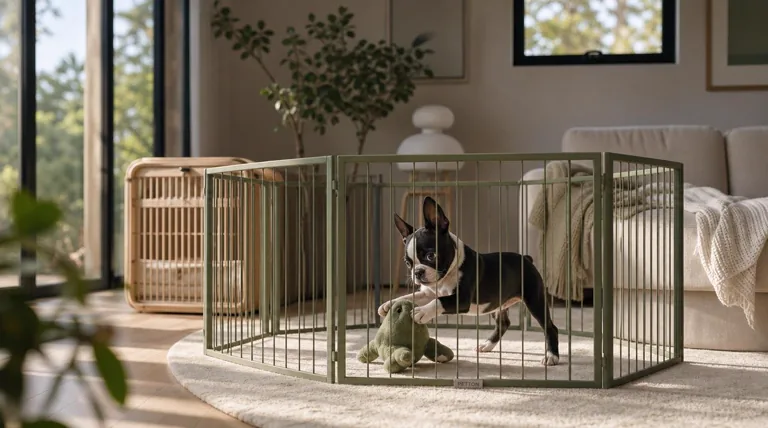
DOGCrate vs Playpen for Dogs: What’s Better for Aussie Owners?
Crate, playpen, or both? We compare the two so you choose the right safe space for your dog's age, size and temperament.

 DOG
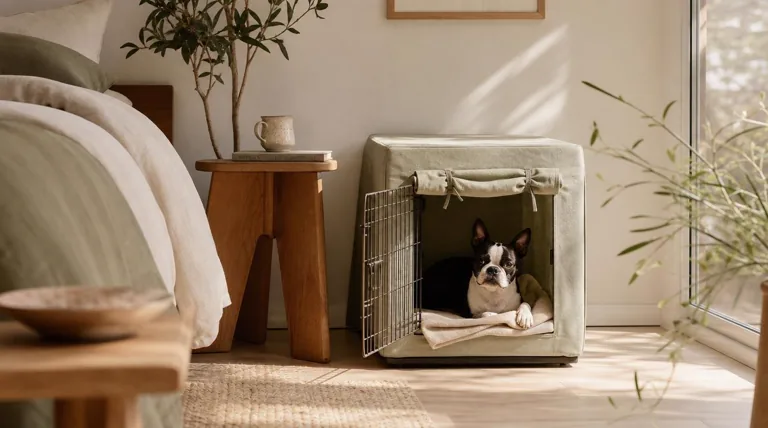
DOGUltimate Guide to the Best Dog Crate Covers in Australia
The right cover turns a crate into a calm, den-like retreat. We found the best for airflow, fit and a better night's sleep.
 DOG
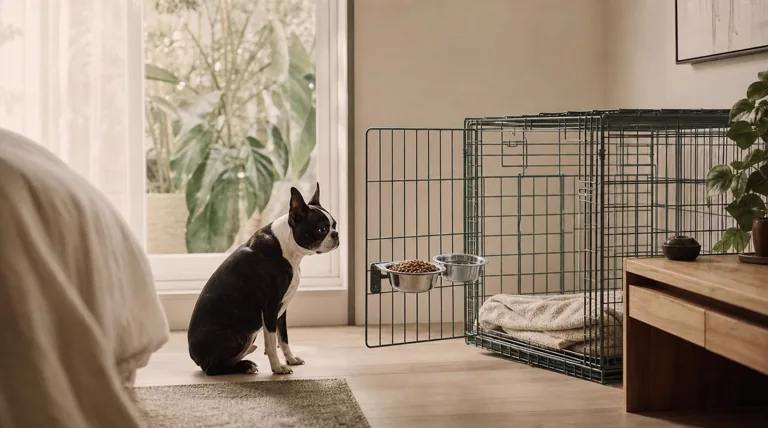
DOGUltimate Guide to the Best Dog Crate Food and Water Bowls in Australia
Spill-proof bowls that clip in and stay put. We found the best crate feeding and water options for travel and home.
