Dogs | Dog Training
How to Stop Your Dog Pulling on the Lead: A Calm, No-Yank Guide
Every walk starts the same way: the door opens, the lead goes tight, and your dog tows you down the street like a sled dog with a schedule to keep. Pulling isn't your dog being difficult — it's the most natural thing in the world to a dog who's excited and walks faster than you do. The good news is loose-lead walking is a skill, and skills can be taught. It comes down to the right setup and a bit of consistency. Get those two right and the walk turns back into the good part of everyone's day.
The Upshot
Pulling isn't disobedience — it's a habit that pays, so stop paying it.
Most dogs pull because forging ahead gets them where they want to go. Take the reward out of it with a front-clip harness and a lead that never rewards tension, then pay the loose-lead moments generously. A couple of weeks of consistency does what brute force never will.
Best No-Pull Harness

rabbitgoo No-Pull Dog Harness
- Front and back leash clips
- Padded vest spreads the load
- Front clip isn't a martingale
See the full Product Guide: Best No-Pull Dog Harnesses in Australia
Best Training Treat
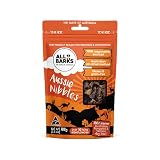
All Barks Aussie Nibbles
- Hypoallergenic kangaroo + venison
- Bite-sized for training rewards
- Small 100 g pack
See the full Product Guide: Best Everyday Healthy Dog Treats in Australia

Here's the part most people get wrong: they treat pulling as a battle of strength, brace against the lead, and wonder why nothing changes after months of it. A dog leaning into steady pressure is only doing what bodies do — pushing back against a force. The fix has nothing to do with pulling harder. It's about stopping the pulling from working, rewarding the walking you want, and giving your dog a bit of gear that keeps everyone comfortable while the lesson sinks in.
We'll go through why dogs pull, how to set the walk up so a lunge gets your dog nowhere, and a simple training routine you can run on the way to the park. Pepper still forgets herself when a possum's been through the yard — no dog is a robot — but she recovers in a step or two, and that's the real goal: not a dog that never pulls, but one that chooses to come back to your side.
Quick Takeaways
The five things worth remembering. Scroll across to read all five.
Pulling is learned
Dogs pull because it works — every step forward while the lead's tight is a reward. Stop the forward motion paying off and the habit starts to come apart.
Gear buys control
A front-clip harness moves the pressure off the throat and turns a lunge back toward you. It won't train the dog for you, but it makes every session safer and easier.
Reward the slack
Catch the moments the lead goes loose and pay them fast with a treat or praise. Your dog repeats whatever gets rewarded, so make calm walking the paying job.
Stop when it tightens
The second the lead goes taut, stop dead or change direction. A tight lead should mean the walk pauses, so pulling never gets your dog closer to the good stuff.
Keep sessions short
Five focused minutes beats an hour of frustration for both of you. Practise on quiet streets first, build up slowly, and end while your dog's still winning.
Why your dog pulls, and why bracing back makes it worse
Dogs don't pull to wind you up. They pull because it works — every time the lead goes tight and the walk keeps moving, your dog learns that leaning into the harness gets them to the next lamppost faster. Add a dog that naturally walks quicker than we do, a nose that wants to read every message on the footpath, and a world full of other dogs, and pulling becomes the default before you've reached the corner.
There's a bit of biology working against you too. When a dog feels steady pressure on its chest or neck, its instinct is to push back against it — the same reflex that lets sled dogs lean into a harness all day. So when you brace your arm and haul back on a tight lead, you're not correcting the pull; you're giving your dog something to lean on. The lead turns into a tug-of-war rope, and your dog is better at tug than you are.
Once that clicks, the whole approach changes. The job is to make pulling stop paying off and turn walking beside you into the thing that earns the good stuff — the forward motion, the sniff, the treat. Get that balance right and even a strong dog eases off, because dogs repeat whatever gets rewarded and drop whatever doesn't.
Set the walk up so pulling gets your dog nowhere
Before you teach a single thing, sort the gear and the setting. Trying to train nice walking while your dog is choking itself on a flat collar, over-excited on a busy road, is a losing game. Management first, training second — you want the deck stacked in your favour before the lesson even starts.
Start with where the lead attaches. A front-clip harness sits across the chest and turns a lunging dog gently back toward you instead of letting it drive forward, and it keeps all that force off the throat. The RSPCA recommends a front-attach harness for exactly that reason — it takes the pressure off a dog's neck while you teach better habits. A well-fitted front-clip no-pull harness won't train the dog on its own, but it makes every walk safer and every lesson easier. Skip the retractable lead while you're at it — a fixed lead of about 1.2 to 2 metres gives your dog consistent feedback, whereas a retractable one quietly teaches that pulling extends its range.
| Attachment | Best for | Watch out for |
|---|---|---|
| Front clip (chest) | Committed pullers and early training | Lead can swing under the front legs if it's too long |
| Back clip (shoulders) | Dogs already walking on a loose lead | Can encourage a strong dog to lean in and pull harder |
| Head halter | Powerful dogs that need extra steering | Needs a slow introduction; some dogs paw at it at first |
Then manage where you practise. Don't run your first sessions on the walk your dog is maddest about — the one past the off-lead park at five o'clock. Start somewhere boring: the quiet end of your street, the backyard, an empty car park. A dog that's already over the top can't take anything in, so you want the training wheels on while the skill is brand new and the distractions are low.
Teaching the loose-lead walk, step by step
With the gear on and a quiet spot picked, the method is simple and a bit repetitive — which is exactly why it works. You're teaching one rule, over and over: a loose lead makes good things happen, a tight lead makes everything stop.
Load a pouch or a pocket with something your dog rates highly. Dry biscuits won't cut it against the smell of another dog — you want small, soft, high-value rewards you can hand over fast, one after another. Then run the routine below.
- Reward the start. Before you move off, get your dog's attention and pay it. You're setting the tone: eyes on you earns something good.
- Walk, and pay the slack. Take a few steps. Every moment the lead stays loose, mark it with a cheerful "yes" and reward at your side. Feed it right in at your leg, so your dog learns exactly where the good spot is.
- Stop the second it tightens. The instant the lead goes taut, stop dead. No yanking, no telling off — just become a boring tree. Wait for your dog to ease the tension or glance back at you.
- Restart when the lead loosens. The moment there's slack again, say "yes", reward, and walk on. Your dog learns the quickest way forward is a loose lead, and pulling only ever hits pause.
- Keep it short. Five to ten minutes of this beats a marathon every time. Finish while your dog's still getting it right, and build up the distance and the distractions gradually, over a week or two.
If stop-and-wait doesn't suit your dog, try the turn-around instead: the moment the lead tightens, calmly change direction and walk the other way. Your dog has to hurry back to your side, and forging ahead never once gets it where it wanted to go. Both methods teach the same lesson, so pick whichever fits your dog and stick with it.
One tweak that speeds all this up is a clear marker — a short word like "yes", or a click, given the instant your dog makes the right choice and then followed by the treat. The marker tells your dog precisely which move earned the reward, so there's no guessing. Early on, be generous and pay every few steps of loose lead. As the walks improve you stretch the gaps out and save the rewards for the harder moments — passing another dog, leaving a good smell — until the loose lead becomes the habit and the treats fade to the occasional bonus.
A tight lead should mean the walk stops. A loose lead should mean the walk — and everything good about it — carries on.
Consistency is the whole trick. If pulling still gets your dog to the park nine times out of ten, that tenth stop teaches nothing. Everyone who walks the dog needs to run the same rule, or your dog just learns to pull for whoever's the soft touch in the family.
Mistakes that keep the pulling going
Most stalled progress comes down to a handful of habits that quietly reward the pulling. Dodge these and you'll get there a lot faster.
- Letting the lead tighten "just this once" to get home quicker — every pull that works undoes a week of stops.
- Rewarding out in front instead of at your side, which teaches your dog to surge ahead for the treat.
- Using rewards your dog doesn't care about — if the treat can't beat the environment, the environment wins.
- Practising only on the hardest walk, when you should build the skill somewhere easy first.
- Reaching for a quick fix — before you consider a check chain or a correction collar, know that pain-based tools can create fear and fallout without teaching your dog what you want instead.
If your dog only pulls toward specific triggers — other dogs, cats, bikes — you're likely dealing with over-excitement or reactivity, and that needs a slightly different plan: more distance from the trigger, and rewarding calm before your dog tips over the edge.
Puppies, big dogs and the Aussie factor
The method's the same whatever you're walking, but a few tweaks help. With a puppy you've got the easiest job going — start loose-lead walking from day one and you never have to un-teach the pulling later. Keep the sessions tiny, though; a young pup's attention runs out in a hurry.
With a big, strong dog that's already a committed puller, the gear earns its keep. A well-fitted front-clip harness, or a head halter for a really powerful dog, gives you the control to stay safe while the training catches up, and it saves your shoulders in the meantime. If you do reach for a head halter, bring your dog onto it slowly and keep the lead loose — a sharp jerk can wrench the neck, which is why the RSPCA treats it as a step beyond a harness, not a first choice. Don't try to muscle through it — that's the tug-of-war you can't win.
Then there's the Australian bit. Through summer, footpaths and bitumen get hot enough to burn paws, so train in the cool of the early morning or the evening and skip the middle of the day. Press the back of your hand to the path for five seconds; if you can't hold it there, it's too hot for your dog. Cooler, quieter walks happen to be calmer walks, which is exactly when your dog learns best. And stash the rewards somewhere they won't melt into a useless lump in a hot car.
FAQ
Will a no-pull harness stop my dog pulling on its own?
It helps a lot, but no harness trains a dog by itself. A front-clip harness takes the choke out of a pull and turns your dog back toward you, which makes pulling less rewarding and buys you the moment to praise a loose lead. The gear stops the immediate problem; the manners come from what you do with the lead over the following weeks. Pair the harness with reward-based training and most dogs ease off noticeably within a fortnight.
How long does it take to train a dog to stop pulling?
There's no fixed timer — it depends on how long the pulling's been rehearsed, how strong and excitable your dog is, and how consistent everyone in the house is. Many dogs show a clear improvement within a week or two of short, daily sessions, but a committed adult puller who's towed people around for years takes longer. The trend matters more than any single walk: if the good walks are slowly outnumbering the bad ones, you're winning.
Should I use a head halter or a front-clip harness?
For most dogs, start with a front-clip harness — it's comfortable, easy to fit, and gives plenty of control for light to moderate pulling. A head halter steers from the head and gives you more control over a very strong or determined dog, but it needs a slow, patient introduction because many dogs dislike it at first and will paw at their face. If a good harness and consistent training aren't enough, a head halter introduced properly is the next step up.
My dog only pulls toward other dogs — is that the same problem?
Not quite. Pulling only at specific triggers — dogs, cats, bikes — usually points to over-excitement or reactivity, and it needs a bit more than the loose-lead routine. Work at a distance where your dog can still think, reward calm behaviour before it tips into lunging, and gradually close the gap over many sessions. If there's barking, lunging or snapping, get a reward-based trainer involved before it becomes a habit.
Is it too late to train an older dog not to pull?
It's never too late. Older dogs can absolutely learn loose-lead walking — they've just had longer to practise the pulling, so it takes a bit more patience to overwrite the habit. The method doesn't change: stop when the lead tightens, reward the slack, and stay consistent. An older dog often has the edge of a longer attention span, so shorter, calmer sessions can click surprisingly fast.
Final thoughts
If I had to boil it down, it's this: the dog isn't pulling to spite you, and no gadget fixes it while you keep letting the pulling work. Put a decent front-clip harness on, load your pocket with something your dog really rates, and be boringly consistent about stopping when the lead tightens. That's the whole game.
Pepper is my reality check on this one — she's strong, keen, and convinced the next smell is the best she'll ever get. Some days the walk is textbook; some days a cat ruins the plan. But the trend only ever goes one way if you keep rewarding the slack and refuse to tow. Start on a quiet street, keep it short, and let the good walks stack up.
We Think You’ll Also Like These Guides
 DOG
DOGBest Dog Travel Water Bottles in Australia: Ultimate Guide
Walks, road trips and hot days — easy hydration on the go. We compared the best leak-free travel bottles for thirsty dogs.

 DOG
DOGBest Greyhound Collars in Australia: 2026 Guide
Slim necks and big heads mean greyhounds need special collars. We found the safest, most comfortable picks for the breed.

 DOG
DOGYour Ultimate Guide to the Best Hands-free Dog Leashes for Running in Australia
Run with your dog, hands free and in sync. We compared the best bungee waist leashes for comfort, control and shock absorption.