Dogs | Accessories
Best Automatic Dog Feeders for Large Dogs in Australia
A large dog gets through a serious amount of food. Where a terrier picks at half a cup, a Rottweiler or a Lab can shift several hundred grams a sitting, and a feeder built for a cat runs dry by Tuesday. An automatic dog feeder made for large breeds is built differently — a bigger hopper, a dispenser that won't choke on large kibble, and enough heft that a 40-kilo dog can't nose it over for a midnight raid. We've compared four you can buy in Australia right now, from a do-everything smart feeder to a no-power gravity bin, and worked out which one suits which big dog.
Best Overall
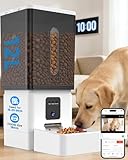
Wnfuo 12L WiFi Automatic Dog Feeder
- 12L hopper, app + HD camera
- Anti-clog for big kibble
- Priciest of the four
Best for Big Eaters

MOLLY&CODY 14L Automatic Dog Feeder
- 14L holds weeks of kibble
- Handles large 22mm kibble
- No app or camera control
Best Budget Pick

ZHEQOGZH 25lb Gravity Dog Feeder
- Holds about 25lb of kibble
- No power or batteries needed
- No timed portion control
Best Food & Water

Marchul Dog Feeder & Water Dispenser
- Timed food plus 8L water
- Raised steel bowls, dual power
- Smaller 7L food tank

We compared four automatic feeders that can keep up with a large dog — judged on hopper capacity, how well they handle big kibble, stability under a determined nudger, and whether they can split the day into the regular meals a deep-chested breed needs. (If your dog's on the smaller side, our main automatic feeder guide covers the wider field.) Here's what separates a feeder that lasts from one that doesn't.
What to look for in a large-dog feeder
The five things that decide whether a feeder keeps up with a big dog. Scroll across to read all five.
Hopper that lasts
A large dog burns through food fast, so capacity is the first number that matters. Look at how many days a full hopper covers for your dog's real portion rather than the headline litres on the box.
Handling big kibble
Large-breed kibble is physically bigger, and a cheap auger bridges or jams on it. A feeder rated for large kibble — many quote a millimetre size — keeps a chunky biscuit from stalling halfway through dinner.
Portion control
A big dog is easy to overfeed, and the RSPCA notes obesity is a common, serious problem in Australian dogs. A programmable feeder drops a measured portion every time, so it's harder to lose track than with a free-poured bowl.
Built to stay put
A big dog noses, leans on and occasionally sits on its feeder. Weight, suction feet, a locking lid or a wall-mount stop a determined dog tipping it over and gorging the whole hopper.
Power and backup
Mains feeders need a battery backup so a blackout doesn't mean a missed meal — worth it in storm season. Gravity feeders sidestep the issue entirely, trading scheduling for total simplicity.
At a glance
Our top four picks compared — capacity, price, and our one-line take on each.
| Rank | Product | Best for | Key feature | Price guide | Check price |
|---|---|---|---|---|---|
| Best Overall |  | Large dogs on a managed feeding schedule | 12L hopper, WiFi app, HD camera, anti-clog auger, backup power | $$$$ | Check price |
| Best for Big Eaters |  | Extra-large breeds and big daily portions | 14L tank, anti-blockage for 22mm kibble, anti-tip, raised steel bowl | $$$$ | Check price |
| Best Budget Pick |  | Free-feeders and no-power setups | 25lb gravity hopper, galvanised steel, rain canopy, buckled lid | $$$ | Check price |
| Best Food & Water |  | Food and water sorted in one spot | 7L timed feeder plus 8L gravity water, raised steel bowls, dual power | $$$ | Check price |
Our picks in detail
What we rate, what to watch for, and the dog each feeder really suits.
Best Overall: Wnfuo 12L WiFi Automatic Dog Feeder
Bottom line — the pick for a big dog on a plan: a huge hopper, timed app portions and a camera to confirm dinner landed.
The Wnfuo is the feeder that does the lot. A 12-litre hopper holds roughly fifty cups of kibble, so even a big dog goes a week or two between refills, and the app lets you set exact portions at exact times rather than guessing with a dial. The anti-clog auger is the part that earns its keep for a large breed — it's built to drop big kibble without bridging or jamming halfway through a meal, which is where cheaper feeders fall over.
What lifts it above a plain timer is the monitoring. A built-in HD camera and two-way audio let you check the bowl emptied, which helps when a missed feed on a big, hungry dog isn't a small thing. It runs on mains power with a backup battery that keeps the schedule alive through a blackout, though the WiFi side needs your router up to change anything from your phone. It's one of the dearer feeders here, and the first setup takes longer than on a feeder you just fill and close. For a large dog you're feeding to a plan, that's money well spent.
| What we love | Areas for improvement |
|---|---|
|
|
Best for Big Eaters: MOLLY&CODY 14L Automatic Dog Feeder
Bottom line — the pick for a big eater: the biggest programmable hopper here, rated for chunky kibble and built to resist tipping.
If your dog empties bowls like a vacuum, the MOLLY&CODY is built for the job. The 14-litre tank is the biggest programmable hopper here — call it a fortnight or so of meals for a large dog before you top it up — and the anti-blockage system is rated to push kibble up to 22 millimetres through without stalling, which covers even the chunky large-breed biscuits that jam lesser feeders mid-meal.
It's made to survive a big, boisterous dog, too. Suction feet and a locking lid fight the nudge-and-tip routine, and a chew-resistant cord keeps the determined ones from turning the cable into a chew toy. The 304 stainless bowl sits raised off the floor, which eases the neck for a tall dog at dinner. You program up to six meals a day by button, and dual power keeps it running if the mains drop out. What you give up is the smart side — there's no app, no camera, no phone alerts — and stock can be hit and miss. For sheer capacity and grunt, though, it's the one I'd point a giant-breed owner toward.
| What we love | Areas for improvement |
|---|---|
|
|
Best Budget Pick: ZHEQOGZH 25lb Gravity Dog Feeder
Bottom line — the cheapest pick here: a steel gravity bin with a rain canopy and a buckled lid, for a big dog that doesn't overeat.
The ZHEQOGZH is a gravity bin, so there's nothing to program. You fill the hopper and kibble slides down into the tray as your dog eats. It holds about 25 pounds of dry food, which is roughly 11 kilos. It's also the cheapest feeder of the four. There's no motor, no battery and no app, so a blackout doesn't matter to it.
It's designed for outdoor use. A canopy sits over the food tray, the tray has holes to drain rain, and two buckles lock the lid down. The body is galvanised steel, with two holes in the back to fix it to a wall or frame. A handle on each side makes it easier to shift. It comes in parts, so plan a bit of time to put it together. Like every gravity feeder, it can't measure portions or time meals. That's fine for a big dog that eats a little at a time. It's the wrong choice for a dog on a weight plan or a deep-chested breed that needs measured meals.
| What we love | Areas for improvement |
|---|---|
|
|
Best Food & Water: Marchul Dog Feeder & Water Dispenser
Bottom line — the all-rounder: timed meals and a week of water in one raised stand, if you accept a smaller food tank.
The Marchul takes a different approach — it's a feeder and a water station bolted to one raised stand, aimed at the owner who wants both sorted in a single spot. The food side is a programmable 7-litre dispenser that drops up to six timed meals a day, while the 8-litre water tank gravity-feeds a stainless bowl, holding enough to keep a single big dog topped up for a few days between refills.
It's a tidy idea for a busy household or a multi-dog home, and the raised 304 stainless bowls sit at a kinder height for a tall dog's neck. Both tanks pull apart with wide openings, so cleaning isn't the chore it is on sealed units. Where it slips is focus: the 7-litre food tank is the smallest here and won't last a giant breed as long as the dedicated feeders, the combined unit means more parts to wash, and it runs on AA batteries you'll need to supply and keep an eye on. As an all-in-one for a big dog, though, it's a genuinely handy bit of kit.
| What we love | Areas for improvement |
|---|---|
|
|
FAQ
What size feeder does a large dog need?
Can automatic feeders handle large-breed kibble?
Gravity feeder or programmable — which is better for a big dog?
Will a big dog just tip the feeder over and eat the lot?
How often should I feed a large dog?
Final thoughts
My staffy Pepper isn't a giant, but I've fostered enough big, food-obsessed dogs to know the pattern — leave a determined Lab alone with a flimsy feeder and you'll come home to a cracked lid and a very full dog. For a large breed, a feeder is only worth having if it's built to be ignored: heavy or anchored, generous in the hopper, and happy to drop the same measured meal at the same time every day. That last part matters more than the gadgetry. Splitting a big dog's daily ration across two or three set meals beats one giant bowl, and our guide on how much to feed your dog helps you land on the number.
If I were buying for a big dog tomorrow, I'd start by being honest about whether I want managed portions or just a full bowl that tops itself up. A programmable feeder earns its price if you're watching weight or feeding a deep-chested breed that does better on smaller, regular meals; a gravity bin is hard to beat on value if your dog self-regulates and you only want to stop lugging the bag out twice a day. Spend on capacity and stability first, screens and cameras second — a big dog doesn't care whether you can watch it eat, only that the food turns up.
We Think You’ll Also Like These Guides
 DOG
DOGBest Automatic Dog Feeders in Australia – The Ultimate Guide
Portion-perfect meals on time, every time. We compared the best automatic dog feeders for busy households and weight-watching pups.

 DOG
DOGBest Dog Food Storage Containers in Australia: Top 4 Picks
A big bag of kibble is only a bargain if it doesn't go stale. Four dog food storage containers ranked — sealed, tough, and sized to how much you…

 DOG
DOGBest Elevated Dog Bowls in Australia: Ultimate 4 Picks
Raised bowls can ease strain for older or larger dogs. We found the best for comfortable, tidier mealtimes.