Dogs | Dental Care
Best Dental Chews for Small Dogs and Toy Breeds in Australia
Small dogs run into dental trouble earlier than big dogs, and it comes down to their size. Toy and small breeds pack the same number of teeth into a far smaller jaw, so plaque builds in the crowded gaps and gum disease sets in early — the RSPCA puts some level of dental disease in around 80% of all dogs by age three. Daily brushing is the gold standard, but most of us miss days, and that's where a good dental chew for small dogs earns its place. The right one scrubs plaque off through the act of chewing, and some go further with ingredients that slow tartar forming in the first place. Here are four worth the shelf space.
Best Overall

Greenies Canine Teenie Dental Dog Treats
- Teenie size for small jaws
- VOHC-accepted plaque control
- Watch gulpers — break it up
Best for Heavy Tartar
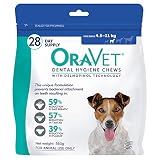
Oravet Dental Hygiene Chews (Small)
- Delmopinol anti-plaque barrier
- Accepted by the Veterinary Oral Health Council
- Priciest chew per piece
Best Everyday Staple

Pedigree DentaStix Small Dog Dental Chews
- Trusted everyday staple
- Ridged X-shape scrubs teeth
- Cereal-filler heavy
Best Natural Choice

WHIMZEES Toothbrush Dental Chews (Extra Small)
- Grain-free, no artificial extras
- Long chew, bristly ridges
- Firm — tough for tiny mouths

The four here aren't interchangeable, and the differences are the whole point of this guide. One's the all-round daily pick, one's built for dogs whose teeth already gather tartar fast, one's the familiar everyday staple, and one's the natural, grain-free choice. Below we lay out the five things that separate a good small-dog chew from filler, put the four side by side in a quick comparison, then dig into each one in detail so you can match the right chew to the dog in front of you.
What to look for in a dental chew for small dogs
The five details that matter most. Scroll across to read all five.
Size for the jaw
A chew built for a big dog does little for a small mouth. Match the size band to your dog's weight so they get a proper chew out of it, and don't swallow it whole or lose interest halfway.
Texture that cleans
Cleaning comes from the chew flexing or scrubbing against the tooth toward the gumline. Softer chewy textures suit little jaws, while firmer ridged ones last longer, so pick for how your own dog chews.
The VOHC seal
The Veterinary Oral Health Council awards a seal to products shown to slow plaque or tartar. It isn't on every good chew, but where you see it, the cleaning claim has been tested in trials.
What's inside
Some chews clean by abrasion alone; others add ingredients that slow tartar forming. Check whether the bulk is cereal filler or something more digestible, because a dental chew becomes an everyday part of the diet.
Daily calories and cost
A chew a day adds up on both the waistline and the wallet. Count it toward a small dog's treat allowance, and work out the price per chew, because the habit only helps your dog's teeth if it happens every day.
At a glance
Our top four picks compared — specs, prices, and our one-line take on each.
| Rank | Product | Best for | Key feature | Price guide | Check price link |
|---|---|---|---|---|---|
| Best Overall |  | Most small dogs as a daily plaque-control chew | Chewy VOHC-accepted texture that flexes around each tooth to the gumline. | $$ | Check price |
| Best for Heavy Tartar |  | Small dogs that build plaque and tartar quickly | Delmopinol coating that forms a barrier against plaque bacteria. | $$ | Check price |
| Best Everyday Staple |  | Budget-minded owners wanting a daily small-dog chew | X-shaped ridged texture that scrubs plaque as the dog gnaws. | $ | Check price |
| Best Natural Choice |  | Owners wanting a natural, grain-free daily chew | Vegetable-based toothbrush shape with bristly ridges and a long chew time. | $$ | Check price |
Our picks in detail
What we love, what to watch for, and who each pick really suits.
Best Overall: Greenies Canine Teenie Dental Dog Treats
Bottom line — the daily chew we'd hand most small dogs: a VOHC-accepted texture that flexes to the gumline, in a proper Teenie size.
Greenies are the default for a reason. The Teenie size is made for dogs from roughly two to seven kilos, so a small mouth gets a chew sized to it from the start. The texture is the clever part — chewy enough to flex around each tooth and wipe plaque down toward the gumline, where small-dog trouble starts — and it carries the VOHC seal for slowing plaque and tartar build-up.
It's soft enough for little jaws yet holds together long enough to make them work, and the shape encourages a proper chew instead of a single gulp. The ingredients are largely digestible, which matters for something a dog eats every single day, and the low fat keeps the calorie hit sensible. Two real caveats: each chew still carries calories, so it counts toward the day's treat budget for a small dog, and enthusiastic gulpers can bolt one whole if you don't watch — break it or hand it over in halves. For most small dogs, though, this is the one to start with, and the one we'd reach for first.
| What we love | Areas for improvement |
|---|---|
|
|
Best for Heavy Tartar: Oravet Dental Hygiene Chews (Small)
Bottom line — the pick for a small dog whose teeth gather tartar fast, adding a delmopinol barrier on top of the usual scrubbing.
Oravet is the one with actual chemistry behind it. Where most chews clean by abrasion alone, these are coated in delmopinol — an ingredient that spreads across the teeth and forms a barrier making it harder for plaque bacteria to stick and organise in the first place. So you get the mechanical scrub of chewing plus a chemical head start, which is why it's a vet-clinic staple. One caveat worth knowing: its VOHC seal is specifically for tartar control — the delmopinol plaque-barrier is Oravet's own claim, not part of that independent acceptance.
That dual action makes it the sensible step up for a small dog whose teeth visibly gather tartar within weeks of a clean — the ones some breeds are prone to. The Small size suits dogs around four-and-a-half to eleven kilos. The trade-offs are real: it's the priciest chew here per piece, the barrier only holds if it's given daily without gaps, and like any firm chew a determined gulper needs supervising. If your dog's mouth stays clean on a basic chew, you don't need this — but for a stubborn tartar former, the extra spend buys real extra protection, and on a small dog headed for an early dental clean that can be money well spent.
| What we love | Areas for improvement |
|---|---|
|
|
Best Everyday Staple: Pedigree DentaStix Small Dog Dental Chews
Bottom line — the familiar everyday pick for small dogs: a ridged, low-fuss stick that does the basic scrubbing job without any drama.
DentaStix is the everyday workhorse. The Small sticks are shaped for dogs roughly five to ten kilos, with an X-profile and grooved surface designed so the teeth sink in and get scrubbed as the dog gnaws down the length. There's nothing fancy in the mechanism — it's texture doing mechanical work — but it's a real daily dental chew from the brand most owners already know.
The appeal is simple: dogs reliably like them, they're low in fat, and they're the familiar name most people reach for without thinking, which keeps the daily routine easy — and consistency is most of the battle with dental care. The catch is the ingredient list — these lean on cereal starches to bind the stick, so they're more filler-heavy than the natural or vet options here, and the cleaning is purely abrasive with no anti-tartar chemistry. For a small dog with an already-healthy mouth, that's a fair trade for a fuss-free, familiar daily chew. Think of it as the reliable everyday baseline, with the vet and natural picks reaching deeper — the chew that keeps the habit going on the days a fancier option would sit unopened.
| What we love | Areas for improvement |
|---|---|
|
|
Best Natural Choice: WHIMZEES Toothbrush Dental Chews (Extra Small)
Bottom line — the natural, grain-free pick: a bristly toothbrush shape that lasts, cleaning through a longer chew rather than additives.
WHIMZEES take the natural route. These are vegetable-based and grain-free, moulded into a toothbrush shape with raised bristly ridges, and the Extra Small is sized for dogs two to seven kilos. There's no cereal filler and nothing artificial — the cleaning comes from the shape and a deliberately long chew time that keeps the ridges working across the teeth for longer than a stick that's gone in seconds.
That longer chew is the whole selling point: the more minutes a dog spends gnawing, the more mechanical cleaning happens, and the bristly grooves are made to reach into the gaps between teeth. And it's more than a natural gimmick — the WHIMZEES Toothbrush is VOHC-accepted for both plaque and tartar, the same independent seal our top pick carries, which is rare for a chew this natural and this affordable. Being firmer and built to last, they suit dogs that like to settle in and gnaw — though that same firmness can be hard going for a very old or very tiny mouth, so match the pick to your dog. Per chew they're good value, and for owners who want a natural, single-purpose chew with a short, clean ingredient list, they're the obvious pick — the long chew even doubles as a bit of quiet enrichment for a dog that likes a job.
| What we love | Areas for improvement |
|---|---|
|
|
FAQ
Do dental chews work for small dogs?
Are dental chews a replacement for brushing my small dog's teeth?
How many dental chews can a small dog have in a day?
At what age can small dogs start on dental chews?
How do I know if my small dog already has dental disease?
Final thoughts
I don't have a dog, but dental disease is one of those things I've read up on plenty as a cat owner — it's sneaky, the mouth looks fine right up until the day it very much doesn't, and animals are good at hiding the discomfort. It's the same reason I keep half an eye on Pixel's teeth at home. Small dogs are in the same boat, only worse, because those crowded little jaws stack the odds against them from puppyhood.
So my take: a chew is the easy win you'll keep up on the days brushing doesn't happen, and it works best sitting alongside the brushing you know you should do. Pick one your dog is keen to chew, because a chew they ignore does nothing; watch that it lasts long enough to do real mechanical work before it vanishes in two bites; and factor the daily cost in, since this is an every-day habit and not a one-off. Then book the annual vet dental check and let the chew hold the line in between.
We Think You’ll Also Like These Guides
 DOG
DOG4Cyte vs Antinol for Dogs: What the Dog Trials Show
Two premium joint oils on very different evidence. We compare the dog trials, what each capsule and gel really contains, and the cost of keeping…

 DOG
DOG4Cyte vs Rose-Hip Vital: Which Dog Joint Supplement Wins?
Same orange tubs, opposite ideas. We compare Rose-Hip Vital and 4Cyte on research, cost and which suits your dog’s stage.
 DOG
DOGArthritis in Dogs: Signs, Causes and How to Ease the Pain
Arthritis creeps up on older dogs and gets written off as old age. Here's how to spot it early, ease the ache at home, and know when it's a vet job.
