Bedding | Dogs
Do Dogs Need Heated Beds in Winter? An Australian Guide
Walk into any pet shop in June and the heated beds are stacked by the door, right next to the winter coats and the self-warming mats. The marketing makes one sound essential for every dog — but for a healthy adult dog with a decent coat and a warm corner of the house, it usually isn't. Dogs are good at finding their own warmth, and most do it without much help from us. The animals that benefit are the ones who've lost a bit of that knack: arthritic seniors, thin or short-coated breeds, toy dogs, and pups. The real question isn't whether heated beds help — it's whether your dog is the kind that needs one.
The Upshot
Most healthy dogs don't need a heated bed — the old, thin and small often do.
A well-fed adult dog with a thick coat and a warm corner sails through most Australian winters without help. The dogs that benefit are the ones whose own warmth has slipped — arthritic seniors, thin or short-coated breeds, toy dogs and pups. Match the bed to the dog, not the calendar.
Best Mat for Senior Dogs

Pet Scene Heated Pet Mat
- Timer and thermostat, steady heat
- Chew-proof steel cord, wipe-clean
- Firm mat, not a plush bed
See the full Product Guide: The Best Heated Dog Beds for Australian Winters
Best Pad for Small Dogs

K&H Self-Warming Pet Pad
- No power, nothing to run
- No cord to plug in or chew
- Mild warmth, small dogs only
See the full Product Guide: The Best Heated Dog Beds for Australian Winters

Bruce, our Golden Retriever, treats winter as a mild inconvenience at worst. He has the double coat for it, and on a cold morning he'll still flop belly-up on the coldest tile in the kitchen as if the chill is a feature. Plenty of dogs are built exactly like this — well-insulated, warm-blooded, and perfectly capable of sorting out their own comfort.
But not every dog is Bruce. A greyhound with almost no coat and even less body fat feels a cold snap the moment it arrives. An old kelpie with stiff hips lowers herself onto a cold floor and pays for it the next morning. A six-week-old pup can't hold its own body heat yet at all. For those dogs the maths around a heated bed is completely different — and worth understanding before you spend the money, or decide you don't need to.
Quick Takeaways
The five things worth remembering. Scroll across to read all five.
Most dogs self-warm
Healthy adult dogs with a decent coat find their own warmth — a sunny patch, a couch cushion, your bed. In a heated home they rarely need a powered option for basic winter comfort.
Seniors feel it most
Arthritic dogs press into warmth because gentle heat eases stiff joints. A heated pad under their usual bed can make a real difference to how they settle at night and move the next morning.
Coat changes everything
A husky and a whippet have completely different needs. Double-coated breeds shrug off the cold; thin, short-coated and toy dogs feel it early and benefit from a warm spot far sooner.
Mild warmth is the goal
Pet-safe beds warm to about a dog's body temperature, not hot. If a pad feels properly warm to your hand, it's already too hot to leave a dog resting on it overnight.
Watch for cold signs
Shivering, curling up tight for hours, reluctance to settle, or cold ears and paws all say a dog is too cold. Most healthy dogs in a warm home never show any of them.
How dogs handle a cold night
A healthy dog is better at staying warm than most owners give them credit for. A dog's normal body temperature sits around 38 to 39 degrees — a touch warmer than ours — and a well-fed adult with the right coat holds that heat comfortably through the kind of cold most Australian homes ever see. The coat does most of the work: a dense undercoat traps a layer of warm air against the skin, while the longer guard hairs shed damp and wind. When the room cools, dogs fluff that coat up, curl tight to shrink their surface area, and tuck nose under tail to breathe their own warm air back over themselves.
Behaviour fills in the rest. Dogs are shameless about chasing warmth — the sunny end of the couch, the patch of carpet over the ducted heating, the spot on the bed you just left. A dog that's a little cold simply moves, and most of the time that's the whole story. Bruce will track the morning sun across the lounge-room floor with more dedication than he gives most things, and he's never once needed a heater to do it.
Coat type is where dogs diverge sharply. A Siberian husky or a malamute was bred for snow and treats a frosty Canberra night as pleasant. A short-coated staffy, a fine-boned whippet or a near-bald Italian greyhound is a different animal entirely — little insulation, little body fat, and a low tolerance for a cold floor. Size matters too: small dogs lose heat faster than big ones because they have more surface area for their body mass, which is why a chihuahua shivers in conditions a labrador wouldn't notice.
Which dogs benefit from a heated bed
The dogs who get real value from a heated bed are the ones whose own ability to stay warm has slipped. Top of that list is the arthritic senior. Cold stiffens sore joints — the same way an old injury aches in a Melbourne July — and dogs with joint pain instinctively seek out warmth because gentle heat relaxes the muscle tension around the joint and takes the edge off. The RSPCA's advice on caring for dogs stresses a clean, dry, draught-free bed in a quiet spot — and a gentle heat source under that bedding is a small, sensible upgrade for an old dog who clearly looks for it.
Next come the dogs who never had much insulation to begin with. Thin, short-coated and toy breeds — greyhounds, whippets, staffies, Italian greyhounds, chihuahuas — run cold through any real winter, regardless of age. So do dogs who've lost condition to illness, dogs recovering from surgery, and very lean working dogs at the end of a hard season. A heated bed gives them back some of the warmth their body isn't producing on its own.
Key Insight
The decision isn't really about the temperature outside — it's about whether the dog in front of you can still manage their own warmth. A healthy, well-coated dog will find heat without any help; a dog whose body has stopped doing that work needs you to do some of it.
Puppies belong on the list, with a caveat. Very young pups — under about eight weeks — can't regulate their body temperature properly and rely on their mum and littermates for warmth. Once a pup is a few months old and eating, playing and exploring normally, it's essentially a small adult and copes well with a warm corner. If you've taken on a young pup in the depths of winter, the safest warmth is a cordless pad wrapped in a towel or a soft self-warming mat, not a powered bed with a cord a teething pup will want to chew.
What an Australian winter means for an indoor dog
Australia doesn't have one winter, it has a dozen. A Brisbane dog goes through July barely noticing the season — an overnight low of 12 degrees inside a brick home doesn't trouble a healthy animal. A dog in a draughty weatherboard in the Tasmanian midlands or the Canberra cold can wake to indoor temperatures in the single digits, and that's a real difference. Most of the country sits between those extremes, and the right answer scales with where you are.
What matters more than the postcode is the household. How well is the home insulated? Does the heating run overnight or click off at bedtime? Where does the dog actually sleep, and how draughty is that spot? A dog on a thin bed on cold tile near an external wall feels winter far earlier than one in a thick bed three rooms in from any window. The good news is that the cheapest fixes come first: lift the bed off a cold floor, move it out of the draught, and add a blanket. That alone solves most of the discomfort before electricity ever enters the picture. If your dog sleeps outdoors, the calculation changes again — it's worth knowing when it's properly too cold for a dog to sleep outside before you rely on any bed to do the job.
If you've worked through all of that and decided your dog would be warmer with a hand, a heated bed or pad is the next step. Treat it as the comfort layer on top of the basics, not a substitute for a dry, draught-free spot to begin with.
What safe warmth looks like
The most common mistake is assuming a heated bed should feel warm to a human hand. It shouldn't. A pet-safe heated pad is built to reach roughly a dog's own body temperature — around 38 degrees — and hold there with a thermostat. To us that barely registers as warm. To a dog, it removes the work of generating heat without ever getting hot. If you press your hand to a dog's heating pad and it feels properly warm, the unit is either faulty or it isn't a pet-specific product.
That distinction is the whole safety story. The RSPCA's winter pet-care advice is to put a pet-rated heating pad or disc in the bed and steer clear of human electric blankets and hot water bottles — a blanket has no idea a dog is lying on it and no cut-off built for a sleeping animal, and a chewed hot water bottle is a scald waiting to happen. The same guidance suggests raising the bed off cold, hard floors and adding a blanket for warmth. Cords are the other hazard worth real attention: anything that plugs in wants a chew-resistant or steel-reinforced cable kept out of reach, and an imported pad should carry a proper Australian three-pin plug rather than a dubious travel adaptor.
| Sensible and safe | Better avoided |
|---|---|
| Pet-rated pad with a thermostat and a body-temp ceiling | Human electric blanket — no dog-aware cut-off |
| Cordless microwave disc, hours of stored warmth for a blackout | Hot water bottle — chew and scald risk overnight |
| Self-warming mat reflecting the dog's own body heat | Dog pressed against a column heater or open fire |
| Bed lifted off cold tile and out of the draught | A bare cord a bored or teething dog can reach |
Signs your dog is feeling the cold
Dogs tell you they're cold, but the signals are easy to miss if you're not looking. The clearest is shivering — like us, dogs shiver to generate heat. Watch too for a dog that curls into a tight ball and stays there for hours, that's reluctant to settle or keeps shifting around looking for a better spot, or that lifts its paws off a cold floor. A dog scratching at the door, whining, or hunkered in one place rather than moving about freely is often just trying to get warm. Cold ears, cold paws and a cool chest are useful tactile confirmations if your dog tolerates a check.
For most indoor dogs in most Australian homes, none of this turns up, and that's the most reassuring result of all. A dog behaving exactly as it always does isn't cold — it's just having its usual long winter snooze. The question only really matters when something has changed: a dog suddenly seeking heat it never bothered with, or an old dog that's slower and stiffer than last winter.
Choosing the right warmth — if you need it at all
If you've weighed up your dog and decided a bit of warmth would help, the choice mostly comes down to how much intervention you actually want running. The gentlest option is a self-warming pad, like the K&H featured above — no electricity at all, just a reflective layer that bounces a dog's own body heat back. There's nothing to switch off, nothing to fail, and no cord for a pup to find. It takes the chill off a cold floor rather than turning into a hot spot, which makes it the right first try for a small dog, a young pup, or a healthy older dog in a milder part of the country.
One step up in control is a thermostatically heated mat with a timer, like the Pet Scene pad above. That's the tool for the dog who really needs steady warmth — the arthritic senior, the thin-coated dog facing a properly cold inland winter. You set the temperature, set the timer so it runs through the coldest hours and clicks off on its own, and slide it under the bed your dog already loves rather than asking an old dog to accept a new one. A cordless microwave disc sits alongside both as the blackout and travel option — heat it in the microwave and it warms a crate or kennel for hours with no power point at all. We compare all three styles side by side in our roundup of the best heated dog beds for an Australian winter.
Whichever you land on, the rule is the same: put it where your dog already chooses to sleep, keep the cord out of reach, and give the dog room to move off the heat when they've had enough. Then give it a fortnight. A heated bed your dog ignores after two weeks is a heated bed your dog didn't need — and for plenty of well-coated dogs, that's a perfectly good answer.
FAQ
Do dogs really need a heated bed in winter?
Most healthy adult dogs don't. A dog with a decent coat, a good feed and a warm corner of the house manages an ordinary Australian winter on their own — they fluff up, curl tight and chase the warm spots around the house without any help from us. The dogs that benefit are the ones whose own warmth has slipped: arthritic seniors, thin and short-coated breeds, toy dogs, pups, and dogs run down by illness. The real test is the dog in front of you, not the temperature on the forecast.
Which dogs feel the cold the most?
Thin, short-coated and small breeds top the list — greyhounds, whippets, Italian greyhounds, staffies and chihuahuas have little coat and little body fat to fall back on. Senior dogs feel it next, especially if stiff joints are already bothering them, followed by very young pups who can't hold their body heat yet. At the other end, double-coated breeds like huskies, malamutes and the bigger working dogs shrug off a cold night that would have a whippet shivering. Size plays in too: small dogs lose heat faster than big ones.
What temperature is too cold for a dog indoors?
There's no single cut-off, because so much depends on the dog. As a rough guide, a healthy, well-coated adult is comfortable in any normally heated home and only starts to feel it when indoor temperatures drop into the single digits overnight — the kind of thing that happens in a draughty home in Tasmania, Canberra or the southern highlands rather than in Brisbane. Thin-coated dogs, seniors and pups feel the same chill earlier, often while the room still seems fine to you. If your dog is seeking heat, curling up tight or shivering indoors, that's your number, whatever the thermometer says.
Will my dog actually use a heated bed if I buy one?
Some will, some won't, and the dog usually decides on the spot. Arthritic seniors tend to take to warmth quickly — they lie down on it and stay put. A healthy younger dog might prefer the sunny patch on the floor, the couch, or your bed instead. The trick is to put a new pad where your dog already chooses to sleep rather than picking the spot for them, then give it a couple of weeks. If they keep ignoring it, that's useful information — they probably didn't need it.
Is a heated bed enough for my arthritic dog, or does she need more?
Warmth helps an arthritic dog settle and move more easily, but it's the comfort layer, not the treatment. Stiff joints in an older dog are common and very manageable, so if you've noticed your dog slowing down, hesitating before jumping, or struggling to rise on cold mornings, a vet visit is the most useful next step — there's far more that helps an arthritic dog than heat alone, from pain relief to joint support to managing their weight. A heated bed sits alongside all of that, making the nights more comfortable while the real management does the heavy lifting.
Final thoughts
Bruce, for all that he's built like a small pony, has never needed a heated bed a day in his life. He has the coat for an Australian winter and the good sense to park himself over the ducted heating when he wants more. That's the honest answer for most healthy, well-coated dogs: they already know how to stay warm, and a heated bed becomes one more thing in the cupboard.
The dogs that change the picture are the old ones and the thin-coated ones. A gentle, steady warmth does help a stiff old dog settle and move more easily on a cold morning, and for an animal like that the bed earns its place every night of winter. If you're not sure which kind of dog you've got, watch them for a fortnight before you spend a cent. They'll tell you — the way Bruce tells me he's fine by sprawling on the coldest tile in the house — by either curling up on the warmth and refusing to move, or ignoring it completely.
We Think You’ll Also Like These Guides
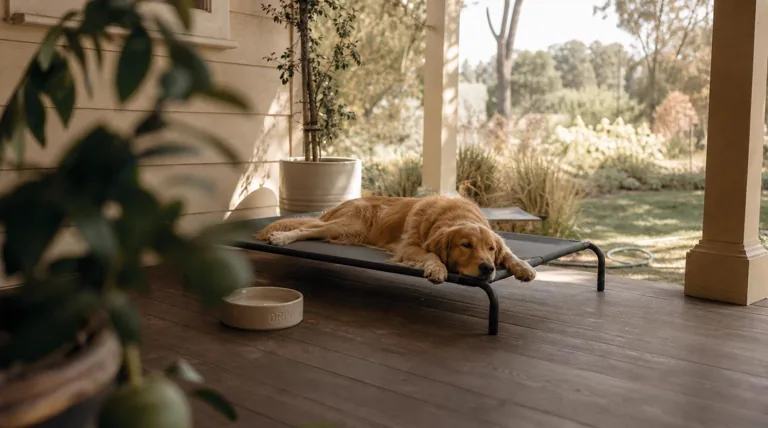 DOG
DOGBest Dog Cooling Beds in Australia: Ultimate Guide
A cooling bed gives your dog a chill spot when the mercury climbs. We picked the best for safe, no-power relief all summer.

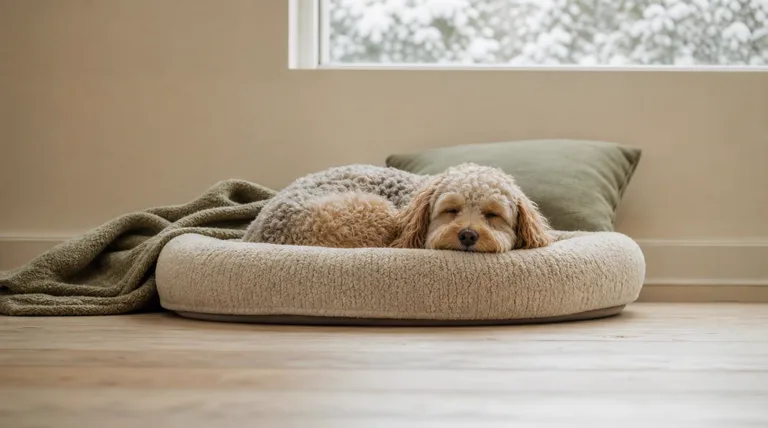 DOG
DOGThe Best Heated Dog Beds for Australian Winters: Ultimate Guide
A frosty morning is hard on an old dog. We found four heated beds — electric, cordless and no-plug — to keep your dog cosy through an Aussie winter.
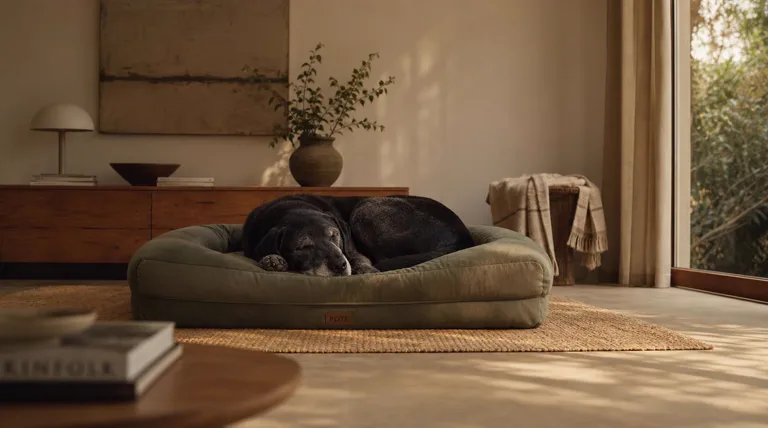 DOG
DOGBest Orthopaedic Dog Beds in Australia: Ultimate Guide
The right orthopaedic bed keeps a stiff, ageing dog off the hard floor. We rank four supportive foam picks for senior dogs of every size.
